

Remote and hybrid work are not just trends, they are expectations.. Even in hardworking communities across Eastern Idaho, businesses are seeing the need for flexible work environments. Whether it’s winter weather, regional travel, multi-location operations, or employee retention, having the right remote strategy in place can give your company a serious advantage.
Remote work can be highly effective, but it only succeeds when the underlying systems and processes are reliable. Without a strong foundation, teams may face communication breakdowns, security risks, and decreased productivity.
To successfully support remote or hybrid teams, your business needs three critical components: connectivity, security, and productivity tools.
Let’s break down what that means so you can understand the potential risks and challenges. We will also explore practical steps your business can take to be fully prepared.
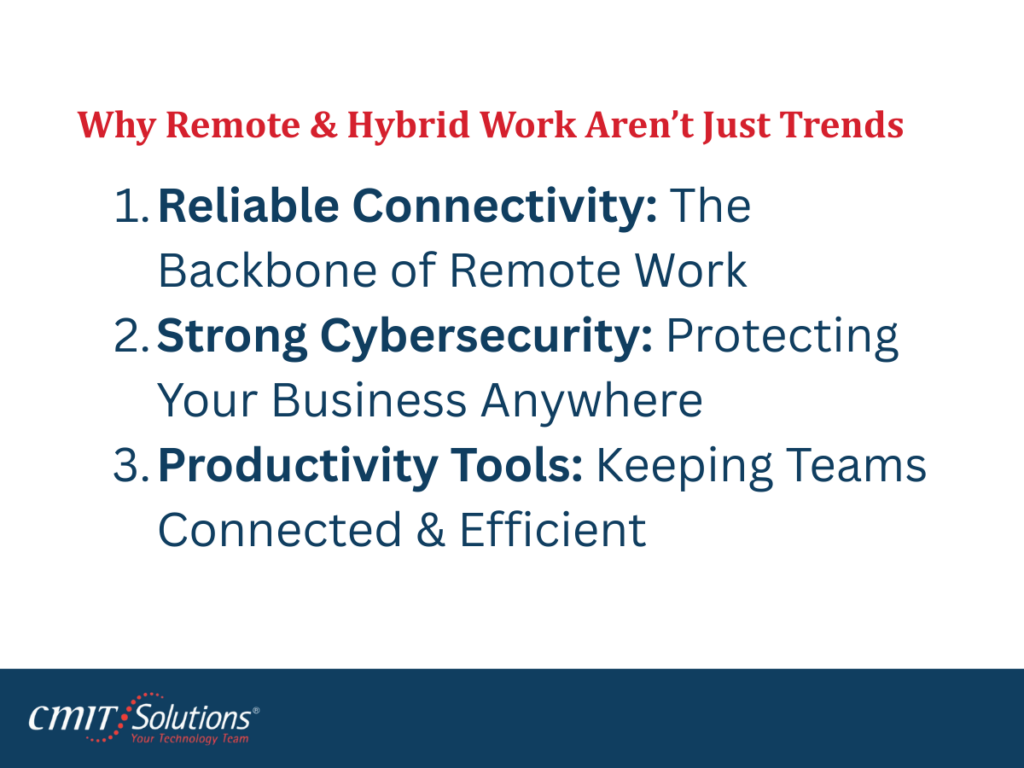
1. Reliable Connectivity: The Backbone of Remote Work
Strong, stable internet connectivity is the foundation of any remote or hybrid setup. Without dependable access, video meetings drop, files won’t sync, and productivity suffers.
For Eastern Idaho businesses, particularly those in rural or widely spread-out areas, planning for reliable connectivity is crucial. Ensuring strong internet and network access helps teams stay productive, communicate effectively, and support remote or hybrid work without interruptions.
Actionable Tips:
Start by evaluating your office internet speeds and confirm they support video conferencing and cloud-based systems without lag. Ensure employees working from home have reliable broadband connections and recommend minimum speed requirements. Implement business-grade firewalls and consider backup internet solutions to avoid downtime during outages. If your team relies on cloud systems, test performance regularly to identify bottlenecks before they become problems.
When connectivity is strong, everything else runs smoother.
2. Strong Cybersecurity: Protecting Your Business Anywhere
Remote work expands your digital footprint. Employees logging in from home networks, coffee shops, or job sites create additional security risks if not properly protected.
Without proper safeguards, your business data becomes vulnerable to phishing attacks, ransomware, and unauthorized access.
Actionable Tips:
Require multi-factor authentication (MFA) on all company accounts. Use encrypted VPN access for remote connections to sensitive systems. Keep all devices updated with security patches and endpoint protection software. Provide employee cybersecurity training so staff can recognize phishing emails and suspicious activity. Implement role-based access controls to limit exposure of sensitive information.
Security is not optional; it forms the foundation for sustainable and effective remote work. Without strong protections in place, businesses risk data breaches, system vulnerabilities, and disruptions that can compromise productivity and trust.
3. Productivity Tools: Keeping Teams Connected & Efficient
Remote work fails when teams rely on disconnected systems. Email alone isn’t enough. Your staff needs integrated tools for communication, collaboration, and file sharing.
Cloud-based productivity platforms enable employees to collaborate in real time, access files securely, and communicate effectively. This flexibility ensures that teams can stay connected and productive whether they are working in the office, at home, or on the go.
Actionable Tips:
Adopt a centralized communication platform for chat and video meetings instead of juggling multiple apps. Move file storage to secure cloud systems so employees can access documents from anywhere. Standardize project management tools so everyone tracks tasks in the same place. Create clear remote work policies outlining expectations, response times, and communication guidelines.
The right tools eliminate confusion and reduce wasted time.
Signs Your Business May Not Be Ready Yet
If any of these challenges sound familiar, it could be a sign that your current setup isn’t fully supporting your business needs. Taking the time to reassess can help identify gaps and create a stronger, more efficient system.
- Employees struggle to access files remotely
- Frequent video call interruptions
- No formal cybersecurity policies
- Shared passwords across teams
- Confusion about where documents are stored
- Limited visibility into project progress
Remote work is meant to provide greater flexibility and freedom for employees, not add stress or complications. When systems and processes are well-designed, teams can work efficiently without feeling overwhelmed or disconnected.
Why This Matters for Eastern Idaho Businesses
Local businesses compete not only regionally, but nationally. Offering remote or hybrid flexibility helps attract skilled employees, improves retention, and ensures business continuity during weather events or emergencies.
More importantly, it enables your company to grow without being constrained by the limits of physical office space. Investing in the right systems today ensures your business can expand smoothly. Companies that prepare now will gain a long-term competitive advantage.
Final Thoughts
Remote and hybrid work are becoming a permanent part of business, even in Eastern Idaho. However, offering flexibility without a solid infrastructure can create inefficiencies and increase risks.
By strengthening connectivity, implementing strong cybersecurity, and equipping your team with the right productivity tools, your business can operate smoothly from anywhere.
The real question is not if remote work will affect your business, but whether you are prepared to handle it effectively.
If you’re unsure whether your current systems can support remote or hybrid work effectively, it’s time for a professional assessment.
Call (208) 516-2647 today to schedule a consultation and evaluate your connectivity, security, and productivity tools. We’ll help you build a secure, efficient remote strategy tailored to your Eastern Idaho business.
Don’t wait for a problem to reveal gaps in your systems or processes. Taking proactive steps now ensures your business is ready to handle challenges smoothly and avoid costly disruptions.